




How to Recover From Workout Fatigue: The Complete Guide to Exercise Stress and Adaptation
Learning how to recover from workout fatigue requires balancing physical training demands with targeted rest, proper nutrition, and lifestyle habits.
Physical movement acts as a necessary stressor that breaks down muscle tissue and taxes the nervous system.
Core Workout Recovery Strategies:
Fuel Muscle Repair: Consume adequate protein and carbohydrates post-workout to repair tissue damage and replenish depleted energy stores.
Prioritise Sleep: Ensure 7–9 hours of sleep per night to facilitate central nervous system recovery and tissue growth.
Manage Total Stress Load: Adjust workout intensity when dealing with high mental or emotional stress to prevent physical burnout and injury.
Incorporate Rest: Use dedicated rest days and low-intensity movement (like walking) to maintain circulation without adding mechanical strain.
Aches And Pains After Exercise? Slow To Recover?
The Simple Guide to Exercise Stress and Adaptation - Recovery
Do you ache even after the gentlest of exercise? Perhaps you finished a workout and spent the rest of the day feeling brain-fogged, sluggish, or irritable, you’ve experienced the hidden side of physical exercise: movement stress.
Most people believe that workouts build fitness directly in the gym. The reality is that training doesn't make you stronger - it breaks you down.
Growth only happens when you give your body the exact resources it needs to adapt and recover.
If you're wondering how to recover from workout fatigue without feeling constantly burnt out, you don't need to stop moving. You just need to understand the physiological demands of exercise and build a recovery system that matches your lifestyle.
What Actually Happens When We Move?
Every time you exercise - whether you are lifting weights, running, or simply walking up a flight of stairs - your muscles contract through an intricate physiological process. Movement requires energy, nutrients, and nervous system signalling.
Because exercise forces your body out of its baseline state (homeostasis), exercise acts as an deliberate physical stressor.
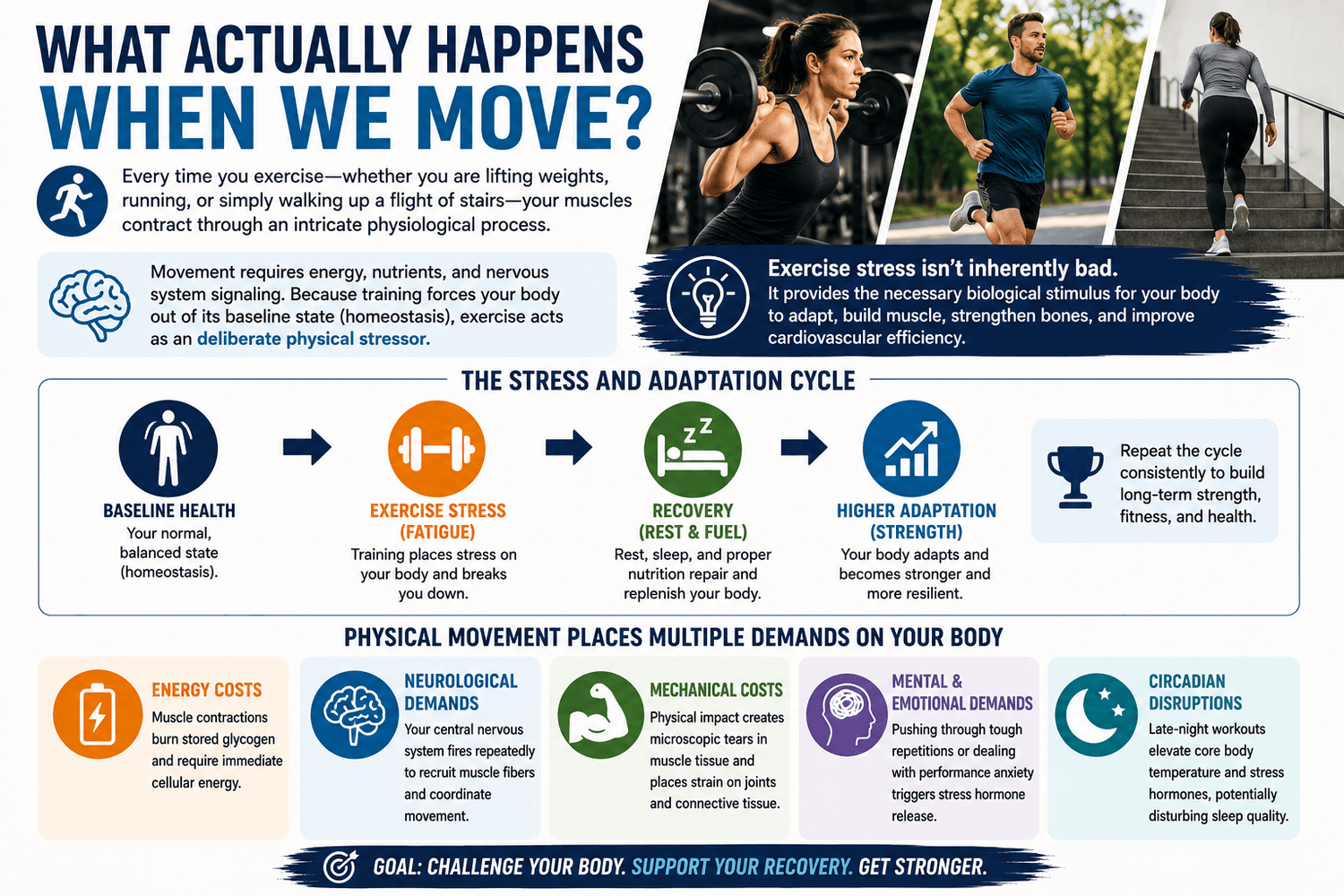
Exercise stress isn't inherently bad. It provides the necessary biological stimulus for your body to adapt, build muscle, strengthen bones, and improve cardiovascular efficiency. However, physical movement places several distinct demands on your system simultaneously:
Energy Costs: Muscle contractions burn stored glycogen and require immediate cellular energy.
Neurological Demands: Your central nervous system fires repeatedly to recruit muscle fibers and coordinate movement.
Mechanical Costs: Physical impact creates microscopic tears in muscle tissue and places strain on joints and connective tissue.
Mental & Emotional Demands: Pushing through tough repetitions or dealing with performance anxiety ("Don't drop this weight") triggers stress hormone release.
Circadian Disruptions: Late-night workouts elevated core body temperature and stress hormones, potentially disturbing sleep quality.
Understanding Fatigue: Good Stress vs. Stagnation
Whether workout stress leads to positive physical adaptation or chronic fatigue depends on your recovery capacity.
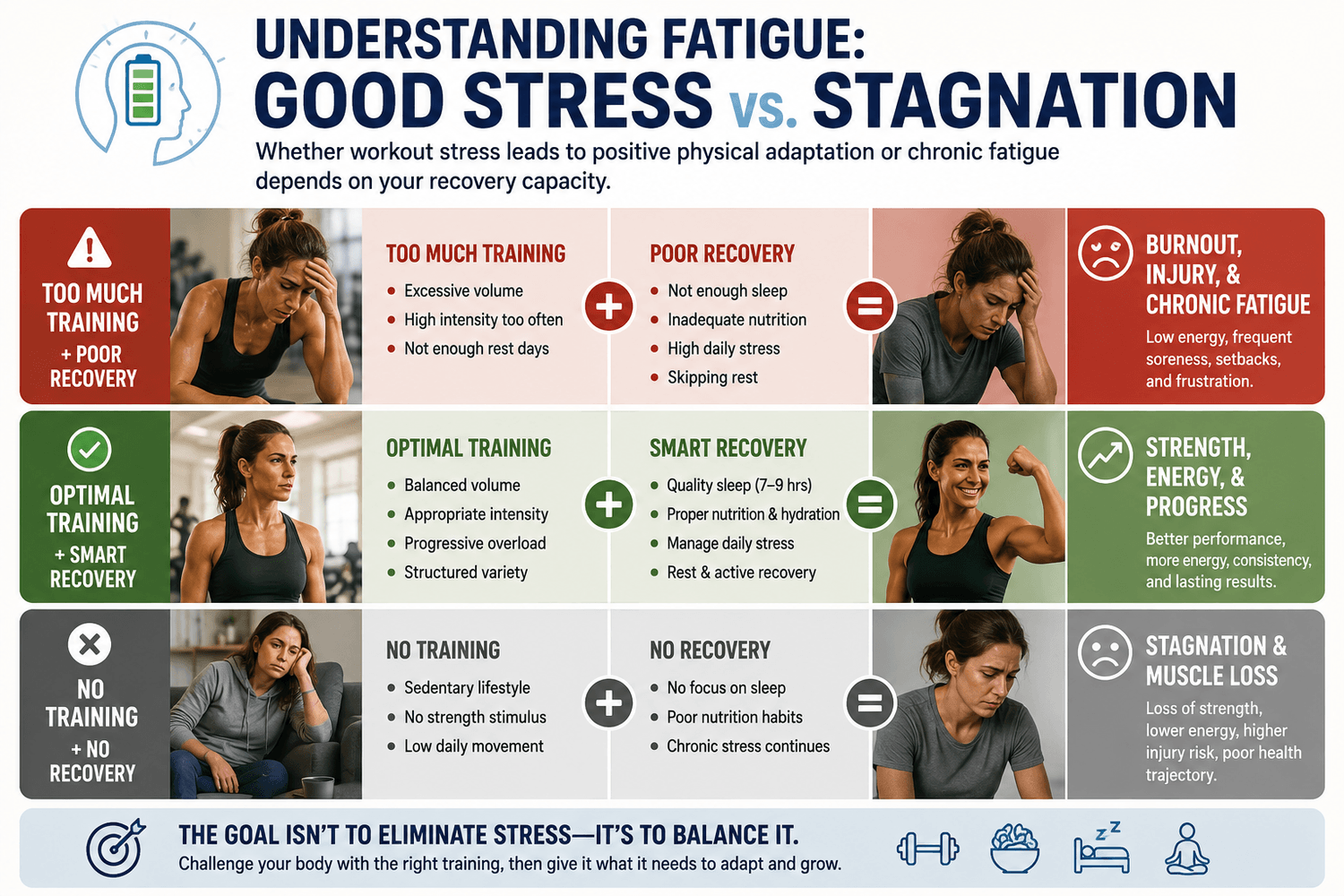
When you apply workout stress without adequate rest, energy, and nutrient support, your body enters a deficit. Over time, unmanaged movement fatigue leads to persistent soreness, lack of motivation, elevated resting heart rate, and plateaued progress.
Conversely, avoiding physical activity entirely is also a physiological stressor. Inactivity leads to muscle atrophy, reduced cardiovascular capacity, and diminished joint mobility. The goal is not to eliminate stress, but to balance training demands with matching recovery habits.
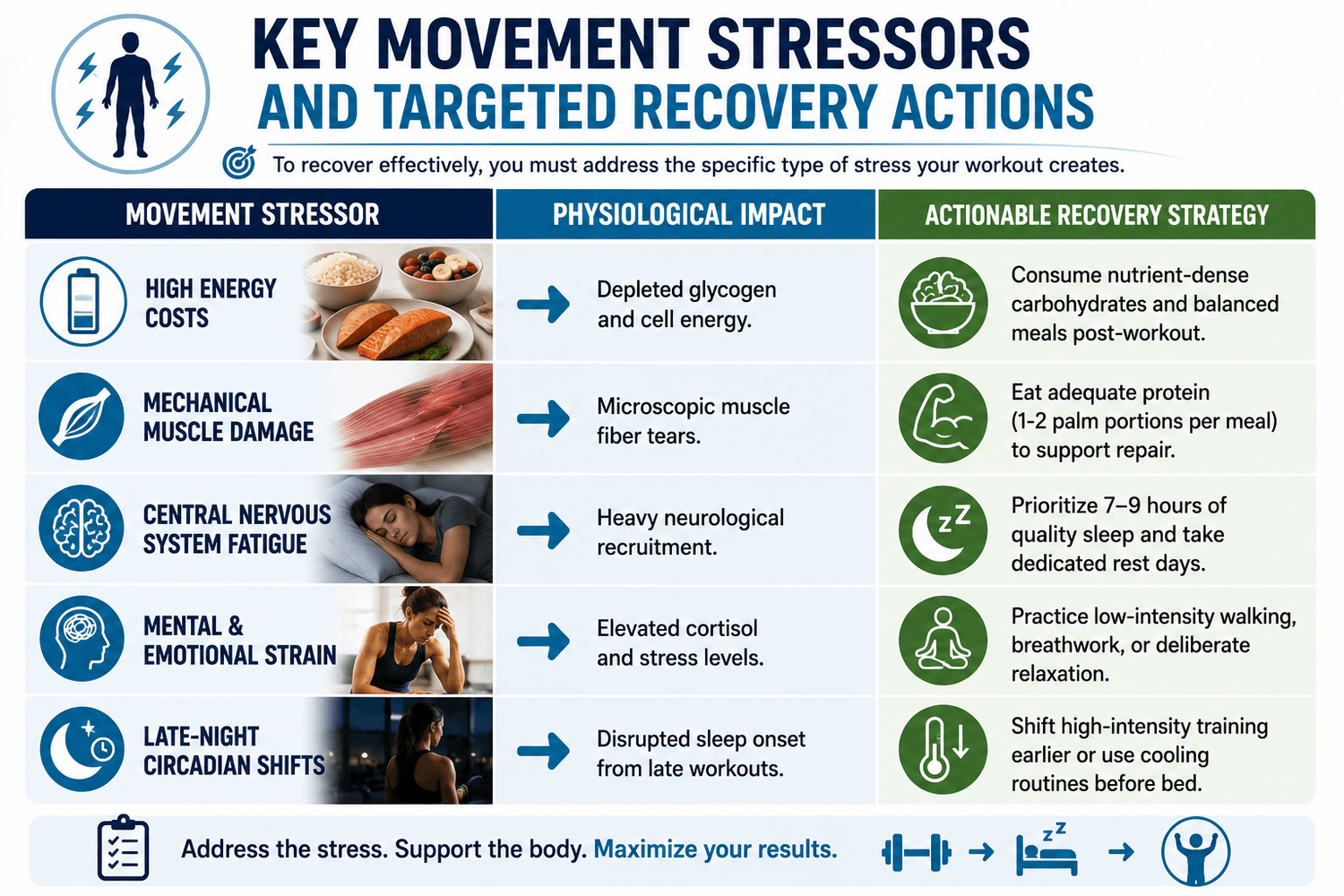
Key Movement Stressors and Targeted Recovery Actions
To recover effectively, you must address the specific type of stress your workout creates.
Step-by-Step: How to Recover From Workout Fatigue
If you want to recover faster, reduce persistent muscle soreness, and maintain high daily energy, implement these three core habits:
A. Match Energy Intake to Exercise Demands
Your body requires fuel to repair damaged tissue and restore glycogen. Restricting calories too severely while engaging in high-intensity workouts compromises your immune system and delays recovery. Focus on whole-food protein sources, complex carbohydrates, and proper hydration.
B. Manage Non-Exercise Stress
Your brain does not distinguish between gym stress, work deadlines, or financial worries. If your daily life is filled with high stress, high-intensity exercise can push your total stress load over the edge. On high-stress days, swap intense workouts for restorative movement like light walking or mobility work.
C. Prioritise Sleep as Your Primary Recovery Tool
Supplements and foam rollers cannot replace sleep. The vast majority of tissue repair, human growth hormone release, and central nervous system recovery occurs during deep sleep stages.
Final Thoughts
Learning how to manage workout fatigue isn't about pushing through burnout or forcing your body into rigid, extreme exercise routines. True progress happens when your movement and recovery work in harmony. By treating rest and nutrition as active components of your exercise or workouts, you allow your body to adapt, rebuild stronger, and maintain the daily energy you need to thrive.
Stop fighting your own evolution, and forcing yourself to follow generic diet and exercise rules designed for 20 year olds. In just 15 minutes, we’ll map out what your unique body actually needs to thrive, so you can have better health, end evening cravings, and build steady, daily energy without giving up the foods you love.
On this quick, relaxed call, we will:
Identify your #1 habit leak: Pinpoint the exact hidden trigger causing your aches and pains, slow recovery, energy crashes or diet burnout.
Draft action plan using my GSPA framework: Create a simple, low-stress blueprint tailored to your schedule, health history, and goals.
Clear the confusion: Get expert answers to your biggest health questions.
Click The Button to Apply For Your Free 15-Minute Strategy Call:
Just so you know, you're in good company...
See What Naomi and Jakob have to say about online weight loss coaching:

Before working with Nico, I'd spent around ten years trying different diets and exercise plans. Every approach was extreme in one way or another. I'd stick to it for a month or two, but eventually I'd realise I couldn't live like that.

Jakob
Dentist
The most effective and life-changing health experience I’ve had. With Nico’s help and guidance I’ve improved my mobility, lost weight, redefined my relationship with food and started making the right health and well-being choices.

Naomi
Finance Professional
Reliable Health Insights, Expert Lifestyle Guidance, Updates, Tools, and Valuable Resources.


Stay informed with valuable health and wellness tips delivered straight to your inbox.
By submitting your details, you understand that you will be sent information by email, and you give permission to receive email communication. Your details will never be shared, and you can unsubscribe by clicking the unsubscribe link at the bottom of any email. Disclaimer: By using this website you agree that it is your responsibility to work directly with your health care provider before, during, and after seeking nutrition and / or fitness consultation. Any information provided is not to be followed without prior approval of your doctor. If you choose to use this information without such approval, you agree to accept full responsibility for your decision. *Results vary from person to person. Please read the privacy policy here.
Contact:
One Habit Coaching
2 Goat Street,
Haverfordwest,
Pembrokeshire,
SA611PX,
UK
07983342824